Bathroom · Buying guide
Age-in-Place Bathroom Upgrades: What's Actually Worth It
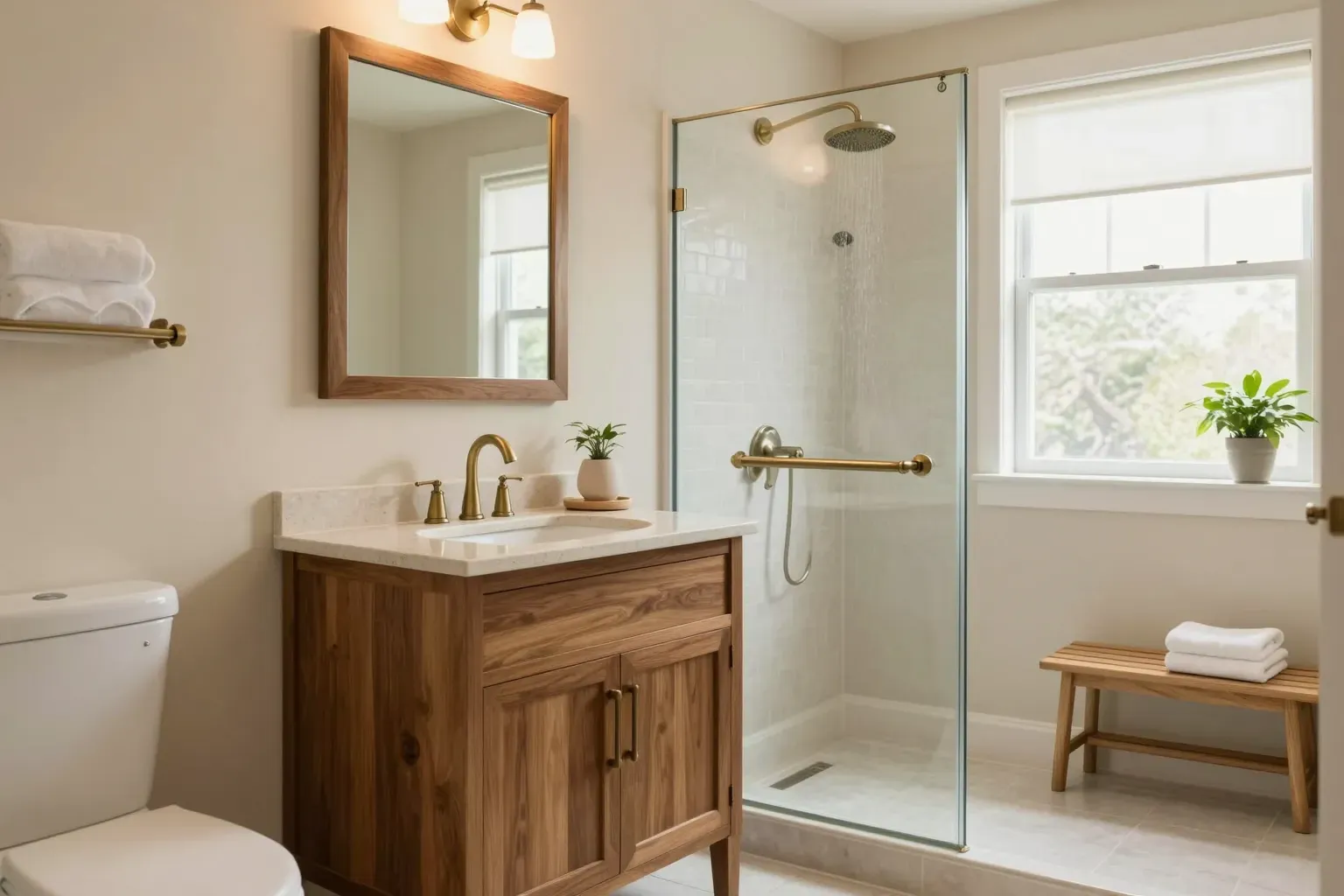
The bathroom changes that buy real independence, chosen for dignity and daily use, not fear. What's worth it, what isn't, and who each pick suits.
| Our pick | Best for | Wrong for | Why it makes the list |
|---|---|---|---|
| Powered toilet lift (Dignity Lifts) | Standing up and sitting down without help | Someone mobile who just wants more height. A raised seat or comfort-height toilet is cheaper and enough. | A motorized seat that does the hard part of getting up. The single biggest independence gain for most people, and the one that reads as a design choice, not medical equipment. |
| Bidet seat (Many Bidets) | Hygiene and privacy without a caregiver | Almost no one. Skip it only on plain preference. | Quietly one of the most dignity-preserving upgrades there is. Adds independence at a fraction of the cost of bigger changes. |
| Lit vanity mirror (Inyouths) | Seeing clearly: the safety upgrade no one calls a safety upgrade | A bathroom that already has good, even light. Then it's a looks upgrade, which is a different reason. | Better, even light removes the shadows that cause missteps and makes daily grooming easier. Looks like a style choice because it is one. |
| Curated fixtures & grab supports (All Sum Home) | Pulling the room together with matched, non-clinical hardware | Anyone making a single change; one well-made piece needs no coordinating. | Where you find faucets and supports that coordinate, so accessible hardware looks intentional rather than added-on. |
Aging in place starts in the bathroom, because that’s where the everyday risks and the everyday indignities concentrate. The good news, and the reason this guide exists: the upgrades that make a bathroom safer have caught up on design. Most of them now read as deliberate choices rather than medical equipment, which matters, because people remove things they’re embarrassed by, and a removed grab bar protects no one.
If you’re reading this, odds are it’s for someone you love: a parent’s bathroom, maybe in the house you grew up in. (If it’s your own bathroom you’re planning ahead for, even better; everything here applies.) Either way, we’ll talk about it the way a friend who just did this for their own parents would: honestly, without scaring you, and with a clear sense of what’s worth the money and what isn’t.
How we chose
We weight three things, in this order:
- How much real independence the change buys: does it let someone do something themselves that they couldn’t before?
- How it looks once installed, because dignity is the whole point, and a clinical-looking bathroom undercuts it.
- How disruptive the install is: a change that needs permits and a plumber is a different decision than one that doesn’t.
We line up several options rather than pointing you at a single seller, and we tell you who each one is wrong for. We haven’t lab-tested these in a workshop; what we’ve done is the homework (comparing what’s available, how it installs, and who it actually suits), and we’ll show that work as we go.
Start with the one change that does the most
If you do nothing else, look at getting up and down from the toilet. It’s the most frequent transfer in the room and the one most likely to need a hand. CDC injury data says the same thing: the share of bathroom injuries that happen getting on or off the toilet climbs steadily with age: about one in five at 65–74, more than one in three at 85 and up. We read that as a map, not a warning: it marks where independence is usually lost first, and so where one well-chosen upgrade buys back the most.
A powered toilet lift, a motorized seat that raises and lowers, does the hard part of the motion. Compared with the alternatives (a raised seat, grab bars alone, or a full comfort-height toilet swap), it asks the least of the person using it and, frankly, looks the least like a hospital. The practical side holds up too: the lifts we compared install on the existing toilet in about half an hour, no plumber, and the maker rates the battery at about a month per charge and the frame to 300 pounds. We haven’t lab-tested those numbers (they’re the maker’s), and we’ll say so the day owner experience disagrees. It’s the upgrade we’d start a parent’s bathroom with.
Who it’s wrong for, and the honest math: someone with plenty of mobility who just wants a little more height. The ladder runs like this: a raised seat with handles is under $100, a comfort-height toilet is a few hundred dollars, and a powered lift is around $1,500. If the cheap rung solves it, buy the cheap rung; the lift earns its price only when standing itself is the problem, not the height.
Then handle hygiene and visibility, cheaply
Two smaller changes punch above their cost:
A bidet seat is, quietly, one of the most dignity-preserving upgrades in the house: it keeps a private task private and independent, and it installs on most existing toilets without a renovation. There’s a decision inside the decision: a simple non-electric attachment runs $20–100 and fits nearly any toilet; a heated, adjustable seat runs a few hundred. Start low unless cold water or fiddly controls would end the experiment in week one. And a pattern repeats across caregiver forums that’s worth knowing going in: the parent who waves it off as “too complicated” is, a week later, often the one who’d give it up last. Who it’s wrong for: almost no one, honestly; the main reason to skip it is simple preference.
Better lighting is the safety upgrade nobody calls a safety upgrade. A lit vanity mirror with even, warm-enough light removes the shadows that cause missteps and makes everyday grooming easier on aging eyes, and it reads purely as a style choice. Who it’s wrong for: a bathroom that already has good, even light; you’d be paying for looks, which is a fine reason but a different one.
Pull it together so it doesn’t look added-on
The difference between a bathroom that feels upgraded and one that feels equipped is whether the hardware matches. The accessibility aisle has finally caught up here: grab supports now come in matte black, brushed gold, and oil-rubbed bronze, and several makers fold them into towel bars, shelves, and corner pieces: support hidden in plain sight. The method is simple: pick the finish family first, then buy every piece that touches a hand (faucet, supports, towel bar) inside it. Who can skip this: anyone making a single change. One well-made piece needs no coordinating; a room’s worth does.
What to leave alone
If the layout works, leave the layout alone. Moving a drain or a stud wall can add thousands to the job and quietly balloon the budget, and it’s rarely what buys independence. Spend the money on the things a person touches and uses every day (the seat, the light, the fixtures), and leave the plumbing where it is.
The short version
Start with the transfer that’s hardest (getting up), add the cheap wins (hygiene and light), coordinate the hardware so none of it looks clinical, and don’t move the plumbing. Done in that order, an age-in-place bathroom buys real independence and still looks like a room someone chose, which is the entire point. If getting up is the place to start in your house, start where we would: with the powered lifts; the comparison at the top of this page is the short list we’d work from.