Surfaces & Decor · Buying guide
Area Rugs That Survive Real Life: A Plain-Spoken Buyer's Guide
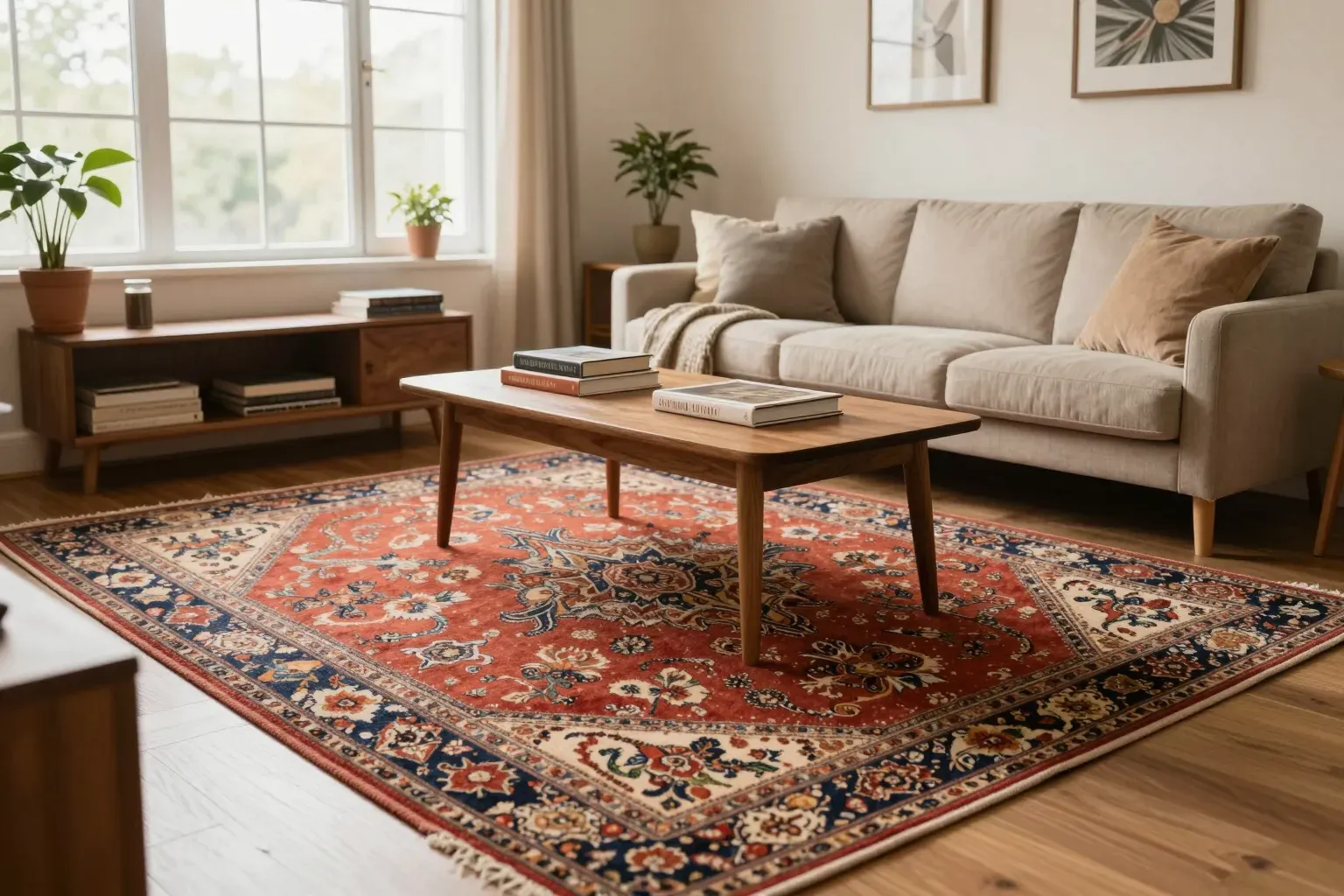
How to buy a rug that looks right and holds up to kids, pets, and traffic: what materials actually last, and who each one is wrong for.
| Our pick | Best for | Wrong for | Why it makes the list |
|---|---|---|---|
| Hand-knotted wool (Locust Lane Rugs) | A living room you want to keep for a decade | — | The most forgiving material there is: wool hides dirt, springs back, and ages well. Costs more up front and earns it back. |
| Flatweave / indoor-outdoor | Pets, kids, and high-traffic halls | — | Less plush, but you can hose most of them down. The honest pick when the rug will take a beating. |
| Natural fiber (jute, sisal) | Texture and budget | — | Looks great, but rough underfoot and unhappy with spills. Right for a low-traffic, low-spill room; wrong under a dining table. |
A rug is the cheapest way to make a room feel finished and the easiest way to waste a few hundred dollars. The trick is matching the material to how the room actually gets used, not to the photo that sold you on it.
What we weighed
Three questions picked this list: will the material stand up to the traffic and spills it’ll actually see, how does it feel underfoot, and how will it age? We lined up a few options rather than pointing you at one, and for each we name the room it doesn’t belong in, because the right rug for a quiet study is the wrong rug under a toddler’s high chair.
Start with the room, not the rug
Before color or pattern, answer one question: what happens on this floor? A formal living room and a mudroom hallway want completely different materials, and the honest test is not which rug is best but which one fails slowest in your house.
Wool forgives almost everything: it hides dirt, springs back from furniture dents, and ages well, which is why it is our default for rooms you want to keep. The full picture is worth knowing, though. In a quiet adult living room a good wool rug can last decades, but under children and pets that working life is closer to three to five years, and wool wants professional cleaning every year or so, which adds up. It sheds for the first few months, and oil-based stains can linger. A room-size wool rug typically starts in the mid-hundreds and climbs from there.
Where pets, kids, and traffic are the daily reality, a flatweave or an indoor-outdoor weave is the honest answer. Synthetics like polypropylene are non-absorbent, so spills sit on top instead of soaking in, and many of these rugs can be carried outside and hosed down. They cost a fraction of wool and ask almost nothing of you. Natural fibers like jute and sisal look wonderful and photograph even better, but jute flattens in a busy path and both dislike moisture; sisal is the tougher of the two. Lovely in a low-traffic room, a regret under a dining table.
Size it bigger than you think
The single most common rug mistake is buying too small. As a rule, the front legs of your furniture should sit on the rug. A rug that floats in the middle of the floor makes the whole room look undersized.
While you are spending on the rug, buy the pad too. A good pad is the cheapest insurance there is: it keeps the rug from sliding, adds a little cushion underfoot, and, by taking the grind of foot traffic, meaningfully extends how long the rug lasts. It also lets air move underneath, which matters most for natural fibers. Skipping the pad to save twenty or thirty dollars is how a rug you meant to keep wears out years early.
The mistake to skip
Skip the impulse to chase a trend color you’ll tire of before the rug wears out. A good rug outlasts a paint color and most of the furniture around it, so buy the material for the life of the room, and let the cushions do the trend-chasing.