Outdoor Living · Buying guide
Patio Furniture That Survives the Seasons
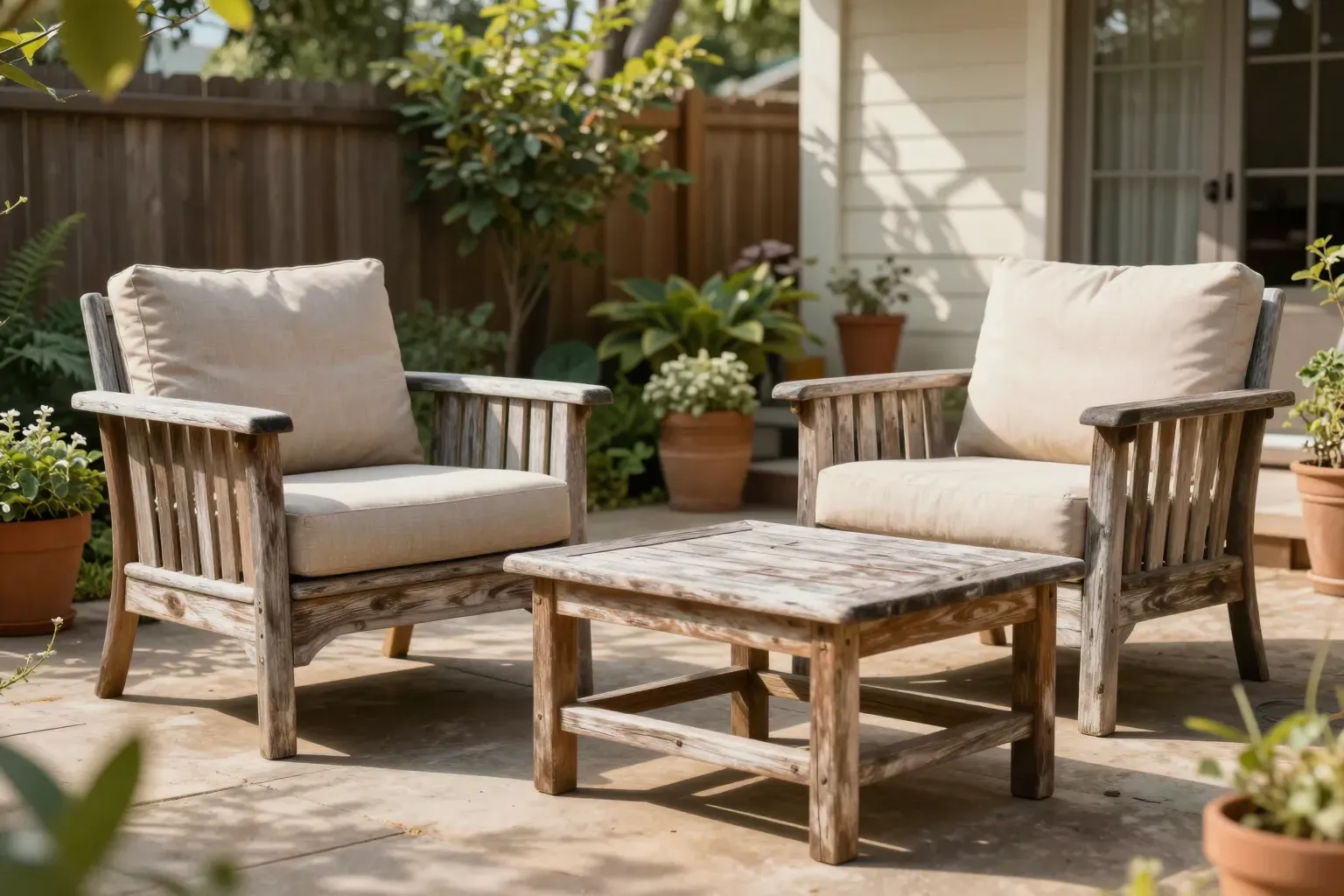
Outdoor furniture is bought once and weathered for years. What materials actually hold up, what they cost you in upkeep, and who each is wrong for.
| Our pick | Best for | Wrong for | Why it makes the list |
|---|---|---|---|
| Teak (Teak Warehouse) | Buy-it-once, weather-it-forever | — | The gold standard for outdoor wood: it shrugs off rain and sun for decades. Expensive, and it greys unless you oil it (some people want the grey). |
| Powder-coated aluminum | Low upkeep and easy moving | — | Rust-proof, light enough to rearrange, and cheaper than teak. Less warm-looking, and it can blow around in real wind. |
| All-weather wicker / cedar structures (Fifthroom) | A built feel: pergolas, gazebos, set pieces | — | Where you go for the structure that anchors a yard, not just a chair. Bigger commitment; measure twice before you buy. |
Outdoor furniture is one of the few things you buy once and then leave out in the weather for years. That changes the math: the cheap set that looks identical in the listing is the expensive one if it’s falling apart in two summers.
The bar to clear
To earn a spot here, a material had to survive sun, rain, and a real climate; ask only as much upkeep as its owner will actually do; and live well day to day. None of them clears that bar everywhere: the right choice in dry Arizona is the wrong one in a wet, windy coastal yard, so each pick comes with the yard it’s wrong for.
Match the material to your weather
Teak is the buy-it-once answer. Its natural oils shrug off rain, rot, and insects, and a good set lasts decades, which is why it costs accordingly: usually well into four figures for a dining set. Left alone it fades to a soft silver-grey, and plenty of people buy it for exactly that look. If you want to keep the honey color, plan on cleaning and oiling it once or twice a season; skip the oil and you are choosing the patina, not failing at upkeep.
Powder-coated aluminum is the low-fuss pick: rust-proof, light enough to drag across the patio one-handed, and easier on the wallet, often a few hundred to low four figures for a set. That same lightness is its one real weakness, since a stray chair can tip or skate in a strong gust. If you live with real wind, weight matters more than the finish does.
If you’re after the structure that turns a yard into a room, a pergola or a gazebo, that is a bigger, measure-twice commitment than a chair, and worth planning before you fall for a finish.
Check the joints, not just the wood
The material gets all the attention, but the joinery is what usually fails first. On wood, look for mortise-and-tenon or doweled joints rather than ones held by a few exposed screws. On metal, fully welded aluminum frames outlast the bolted-together kind, which works loose after a couple of seasons of expanding and contracting in the heat. And whatever the frame, the hardware is the quiet weak point: “rust-proof” aluminum still rusts at cheap steel screws and brackets, so it is worth confirming the fasteners are stainless or marine-grade before you trust the label. A set with ordinary wood and honest joinery will outlive a beautiful one that is stapled together.
The bargain that isn’t
Watch the cushions on any set sold as a deal. They are usually the first thing to fail, and replacing a full set quietly erases whatever you saved. The spec word that matters is solution-dyed acrylic (Sunbrella is the name most people know): the color is worked into the fiber, so it holds for years and shrugs off mildew. Cheaper polyester cushions are dyed on the surface and can fade noticeably in a single sunny season. So buy the frame for the long haul, then choose the cushions on their fabric, not their photo. If a set bundles cushions that are not rated for the weather, price in replacing them and see whether the bargain survives.