Lighting
How to Light a Room So It Feels Finished
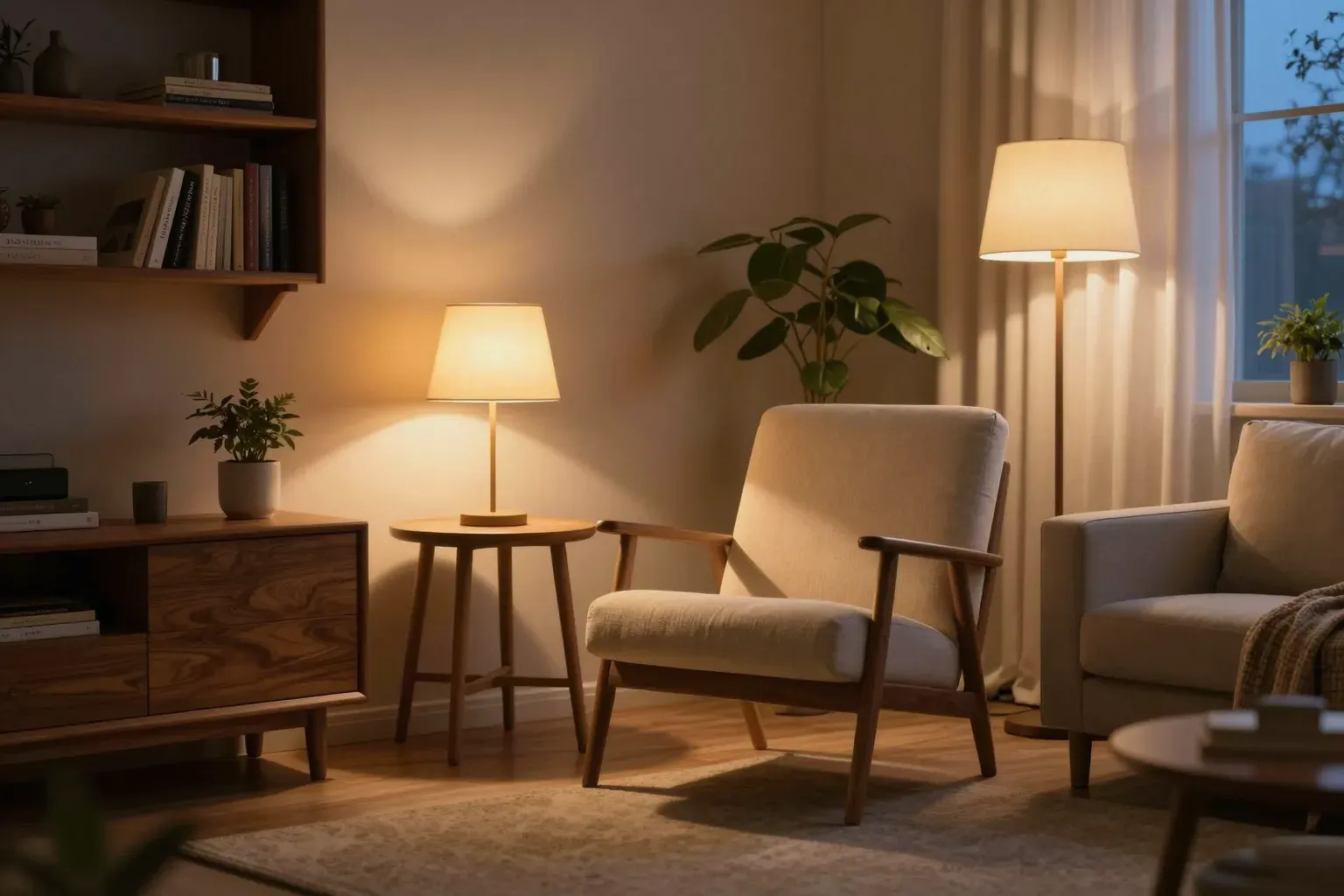
Walk into a room that feels “off” and the problem is usually one thing: a single bright fixture in the middle of the ceiling, doing all the work. Lighting is the cheapest way to make a room feel finished, and almost nobody spends on it deliberately.
The one rule: light in layers
A finished-feeling room runs light across three jobs, not one fixture. There is the general light you navigate by (usually the ceiling), the task light you actually work under (a reading lamp, an under-cabinet strip, a light over the stove), and the low accent light that makes an evening feel settled (a table lamp, a sconce, a lamp on a sideboard). One overhead fixture tries to do all three and does none of them well: it lights the middle of the room bright and leaves the edges dim, flattens whatever it falls on, and makes a living room read like a waiting room. You do not need all three layers burning at once. Adding a single warm lamp at a lower height changes the whole feel of a room for the price of the lamp.
Get the color temperature right
The other quiet fix is bulb color. Cool, bluish light makes a living room feel clinical; a warmer bulb (look for “soft white,” roughly 2700K) makes the same room feel like somewhere you’d relax. It’s a few-dollar change that does more than new throw pillows. One more number is worth knowing: CRI, or color rendering, which is how honest a bulb is about color. It is the reason food and skin can look great under one light and slightly grey under another, and cheap bulbs are usually the culprit; look for 90 or higher where you cook or get ready. What makes a fixture worth paying a little more for is not the look, it is the boring part: a bulb you can dim, a high CRI, and a socket you can re-bulb instead of junking the whole fixture when the light dies. Which fixtures earn that spend is the next guide.
A note on the home gym
The same logic runs in reverse in a garage or basement gym: there you want the bright, cool, even light that would feel wrong in a living room, because the job is seeing clearly, not winding down. Same rule, opposite setting: light a room for what actually happens in it.
What to skip
Skip the single super-bright “daylight” bulb in the living room as a fix for a dim space. It doesn’t read as bright; it reads as harsh. Add a lamp instead.