Lighting · Buying guide
Lighting That Finishes a Room: A Fixtures Buying Guide
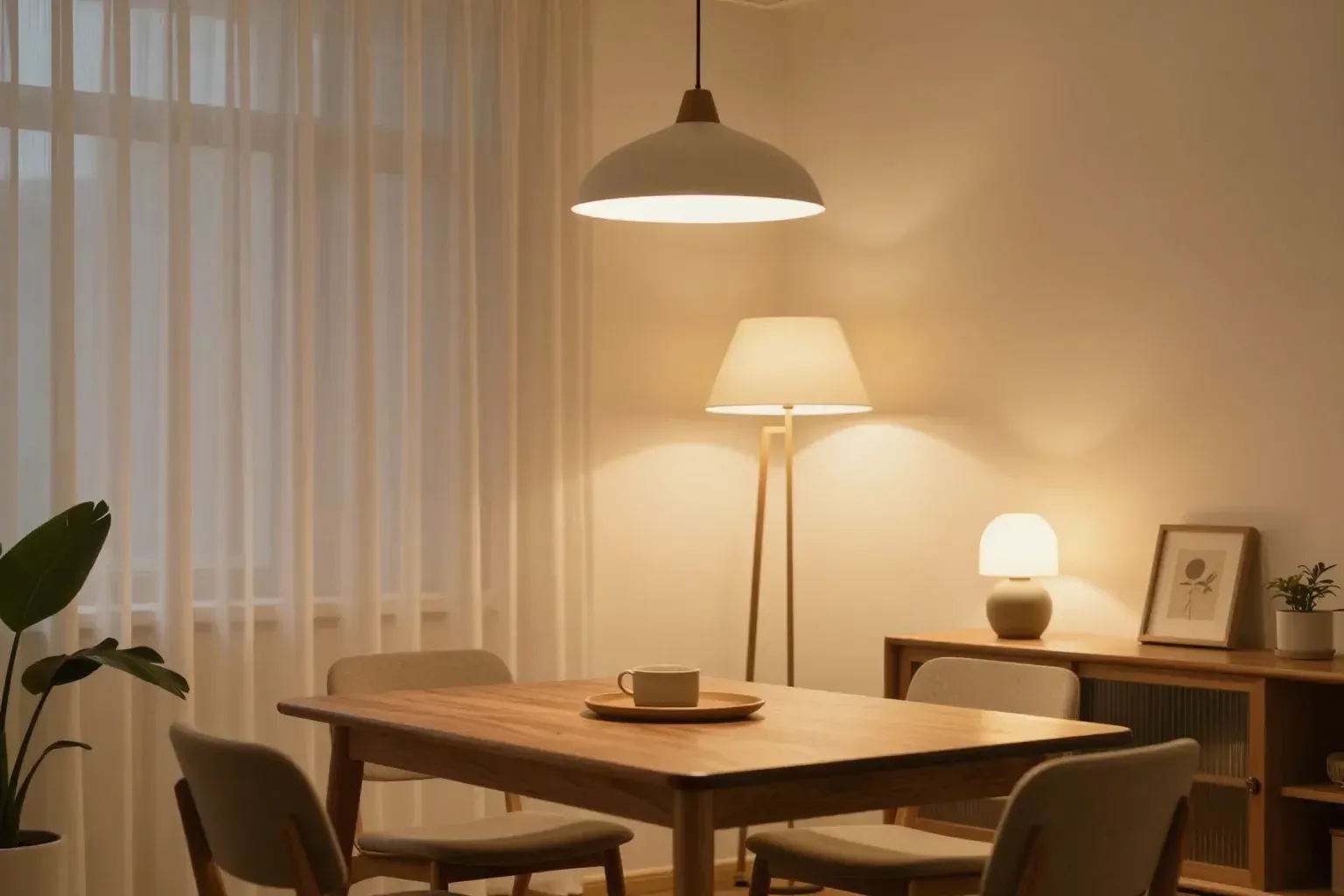
Once you know how to light a room, the question is what to hang. The fixtures worth spending on, the ones to keep cheap, and who each is wrong for.
| Our pick | Best for | Wrong for | Why it makes the list |
|---|---|---|---|
| Statement fixtures: chandeliers & pendants (Lightology) | The one focal light in a dining room, entry, or over an island | Lighting a whole room evenly: a single showpiece casts shadows as much as light, so pair it with recessed or ambient fixtures. | A deep contemporary-lighting catalog, useful when you want a specific designed piece rather than whatever the big-box aisle stocked. Buy one room's focal point here, not every bulb in the house. |
| Everyday ceiling & task lighting (Brighter Lighting) | The workhorses: flush mounts, vanity bars, under-cabinet and closet lighting | A design moment: these are meant to disappear into the room and just work. | The unglamorous fixtures that do most of the actual lighting. Spend your attention on getting the color temperature and brightness right here; the look matters less than the light. |
| Floor & table lamps | Layering light into a room without calling an electrician | Serving as a room's only light source; lamps fill in, they don't replace ceiling light. | The cheapest, most flexible way to add the second and third layer of light. Renters and the indecisive should start here before touching anything hardwired. |
If you have already read how to light a room, you know the principle: a finished room splits the work across ambient, task, and accent light instead of hanging one bright box on the ceiling. This guide is the next question. Once you know you need all three, what do you actually buy, and where is it worth spending?
How we judged each fixture
We sorted fixtures by the job they do, not by how they photograph. For each we name what it is genuinely good for and the room or situation it is wrong for, because the most common lighting mistake isn’t buying a bad fixture; it’s buying a beautiful one for a job it can’t do.
Spend on the focal point, not the field
A room usually wants exactly one fixture that earns a second look: the dining-room pendant, the entry chandelier, the light over the island. That is where a dedicated lighting catalog pays off, because you are choosing a specific designed object and you will look at it every day. Everything else is field lighting: the flush mounts, the hallway cans, the closet lights. Field lighting should be competent and cheap, so buy it from an everyday-fixture source, get the brightness and color temperature right, and nobody will ever study it.
Color temperature decides the mood before the fixture does
Before you fall for a shape, settle the number. Warm light (around 2700K) reads cozy and is right for living rooms and bedrooms; a neutral white (around 3000–3500K) suits kitchens and baths where you want to see clearly. Mixing temperatures across one room is the quiet reason a space feels “off” even when every fixture is nice. Decide the temperature first, then shop the look.
Two numbers people skip: brightness and color accuracy
Wattage used to tell you how bright a bulb was. With LED it tells you almost nothing, so shop by lumens instead: roughly 800 lumens replaces an old 60-watt bulb, and 1,100 replaces a 75. Brightness and warmth are separate dials, so a cozy 2700K bulb and a stark 5000K one can put out exactly the same light. The other number worth a look is CRI, color rendering, which is how true skin, food, and wood look under the light. Cheap fixtures often skimp here and everything beneath them goes faintly grey. Aim for 90 or higher in a kitchen or bath, where the color of food and faces matters, and do not bother paying for it in a hallway nobody lingers in.
Put it on a dimmer
Almost any fixture improves on a dimmer, and it is the cheapest upgrade in lighting. A dimmable ceiling light plus a couple of lamps gives you a bright “clean the kitchen” setting and a low “wind down” setting from the same hardware. One catch is worth knowing before you blame the bulb: LEDs and older dimmers fight. A dimmer built years ago for incandescent bulbs will often make an LED flicker, buzz, or quit dimming partway down, and a bulb that isn’t marked dimmable will do the same on any dimmer. The fix is boring and cheap: pair a bulb labeled dimmable with a dimmer rated for LED, and the flicker usually disappears. If you only do one thing after reading this, put the lights you already own on a dimmer that matches them.
Check whether you can change the bulb
The quiet question on any LED fixture is whether the light is a bulb you can swap or a sealed panel you can’t. Integrated LED fixtures build the light in: they look slim, run bright, often cost less up front, and are rated to last years. But when that built-in LED finally dims or fails, there is no bulb to change, so you replace the whole fixture, and until then you are locked to the one color temperature it shipped with. A fixture with an ordinary socket asks a little more attention to shop for and gives it back later: you re-bulb for a few dollars, swap warm light for cool, or chase a higher CRI down the road. Integrated is fine for a closet or a hallway you will never think about. For a fixture you will live with for a decade in the room you use most, buy one you can re-bulb.
Where to start
Buy the one focal fixture you will actually look at, keep the field lighting cheap and correct, put it all on dimmers that match the bulbs, and layer in lamps for everything a ceiling can’t reach. If you are furnishing from scratch, start with the room you spend your evenings in. That is where good light is felt, not just seen.