Bathroom · Buying guide
The Vanity and the Mirror: Buying the Two Things You Face Every Morning
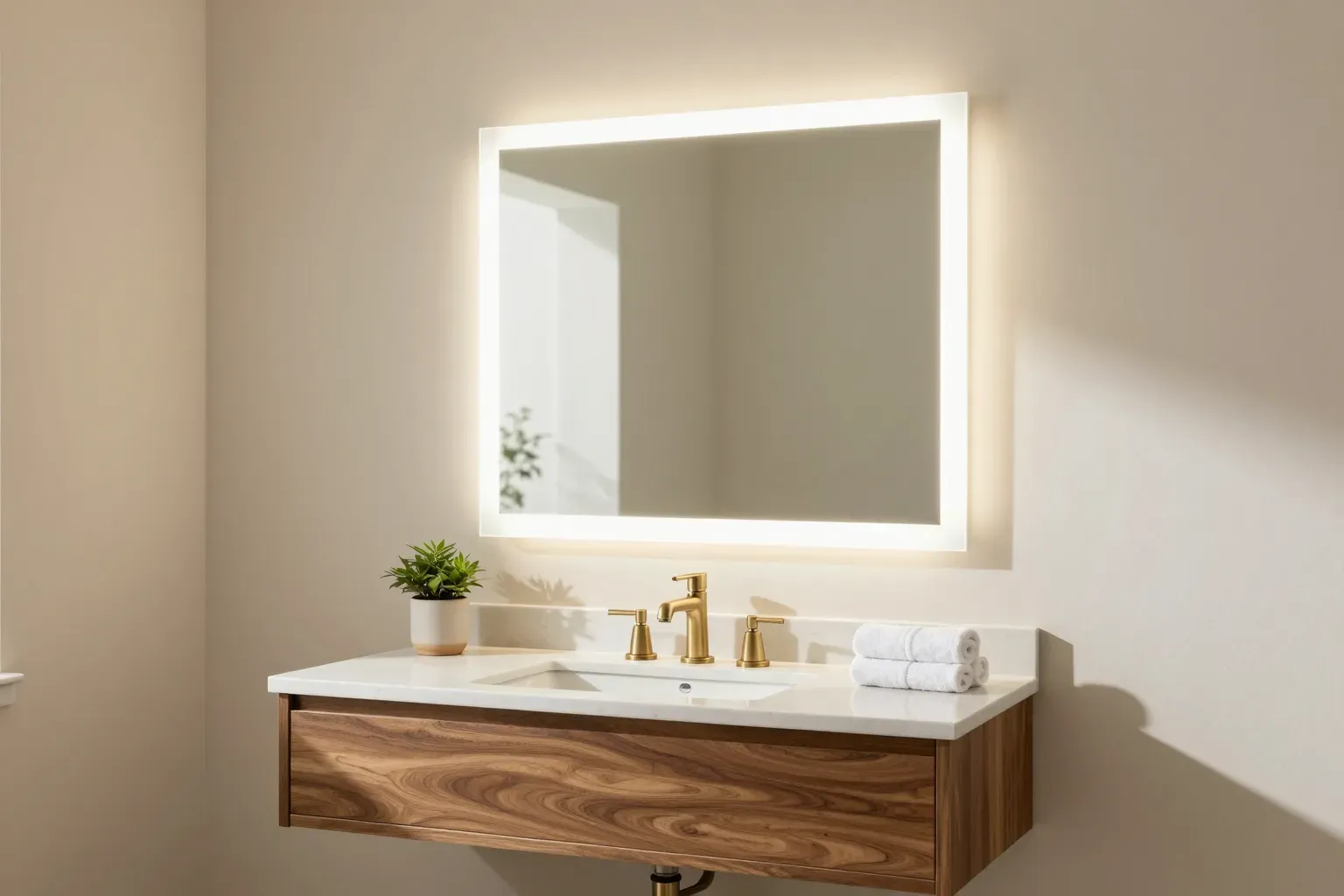
A vanity and a lit mirror set a bathroom's whole tone, and quietly absorb a lot of money. What earns its price, what's just markup, and who each pick is wrong for.
| Our pick | Best for | Wrong for | Why it makes the list | |
|---|---|---|---|---|
| Front-lit LED mirror, adjustable color (Inyouths) | Grooming light you can actually see by | A bathroom that already has good, even overhead light. Then a plain framed mirror does the job for less. | Light aimed at your face, with color you can dial from warm to daylight. The mirror upgrade that earns its keep every morning rather than only in photos. | |
| Large backlit anti-fog mirror (All Sum Home / ExBrite) | A wide or double vanity, and a softer, ambient look | A tight powder room, where a big backlit mirror overwhelms the wall and a small framed one looks intentional. | A halo of light behind the glass plus a built-in defogger. Reads as calm and finished; pair it with overhead light if you also groom here. | |
| Floating vanity | Making a small bathroom feel bigger and easier to clean | A household that needs every cubic inch of storage; the open floor underneath is space you don't get to use. | Wall-mounted, so the floor runs underneath and the room reads larger. You can also set it at a comfortable height instead of the builder default. | |
| Freestanding vanity | Maximum storage and hiding the plumbing | A genuinely tiny room, where the cabinet eats the floor space that made the room feel usable. | Bigger cabinet, more drawers, plumbing tucked away. The workhorse pick when storage matters more than the illusion of space. |
The vanity and the mirror are the two things you stand in front of every morning, which is exactly why they’re worth getting right, and exactly why a showroom can talk you into far more than your room needs. Both come in a dozen tiers, and the gap between the version that earns its price and the version that just photographs well is wider than most people expect.
Where we drew the line
We sorted these by one question: does the feature earn its price in daily use, or only in the catalog shot? For each pick we name the room it’s wrong for, because the right vanity for a shared primary bath is the wrong one for a powder room under the stairs. We haven’t pulled these apart in a workshop; what we’ve done is the homework on sizes, materials, and light quality, and we’ll show that work as we go.
Size the vanity to the room, not the showroom
Start with a tape measure, not a mood board. For a single sink, the 30-to-36-inch range is the sweet spot; a powder room usually wants 18 to 24 inches; a true double vanity starts around 60 inches and needs both the wall and the second set of plumbing to match. Heights have crept up, too: the current standard is a “comfort height” of 34 to 36 inches, noticeably easier on your back than the old 30-to-32-inch builder default. Who should skip the big one: anyone forcing a double into a bathroom that two people will never actually use at once. The width buys nothing but a tighter doorway.
Floating or freestanding
This is the one real fork. A floating vanity mounts to the wall with the floor running underneath, which makes a small room read larger and makes cleaning the floor a thirty-second job, and because it’s wall-hung, you can set it at whatever height suits you. A freestanding vanity gives that up in exchange for a bigger cabinet, more drawers, and plumbing hidden behind a kick panel. Pick floating when the room is small and you want it to feel bigger; pick freestanding when storage is the whole point. Who’s wrong for floating: a household that’s short on storage everywhere else; the open floor is space you’re choosing not to use.
The cabinet matters more than the finish
The finish is what sells the vanity; the substrate is what survives it. Solid wood or good plywood holds up in a humid room; particleboard is the one to avoid, because it swells the first time it meets steam, and a bathroom is the worst room in the house for it. For the countertop, quartz shrugs off stains and water better than marble, which is porous and wants sealing and babying. Buy the boring structural choice here and spend the design budget on the parts you see.
Get the mirror’s light right
A lit mirror is worth it for exactly one reason: the light. Front-lit mirrors throw light at your face and are the better choice for grooming; backlit ones wash the wall behind for ambience; a combined mirror does both. Whichever you pick, the spec that matters is color: look for an adjustable temperature you’ll actually use: warm (around 3000K) for evenings, closer to daylight (around 4000K) for makeup and shaving, paired with a CRI of 90 or higher so colors read true. If a listing doesn’t mention CRI at all, assume it’s low. Two more features that separate good from cheap: a built-in anti-fog demister (better with its own switch or timer, so it isn’t running every time the light is on) and a dimmable touch control. Makers rate the LEDs themselves at roughly 50,000 hours; their number, not ours, but the technology backs it up. Who’s wrong for a lit mirror: a bathroom that already has good, even overhead light. Then you’re paying for looks, which is a fine reason but a different one.
Spend where your eyes and hands go
The morning math is simple: you touch the vanity and look in the mirror every single day, so that’s where money is felt and where it’s worth spending. Size the vanity to the actual room, buy the cabinet for the substrate rather than the finish, and choose the mirror for its light rather than its frame. Skip the upgrades that only earn their price in the catalog. If you’re deciding which mirror to start with, the comparison at the top of this page is the short list we’d work from. And if your bathroom project is really about a fuller refresh, our guide to a bathroom refresh without a full remodel covers where the rest of the budget pays back.