Outdoor Living · Buying guide
Pergolas, Gazebos, and Awnings: Buying Backyard Shade That Lasts
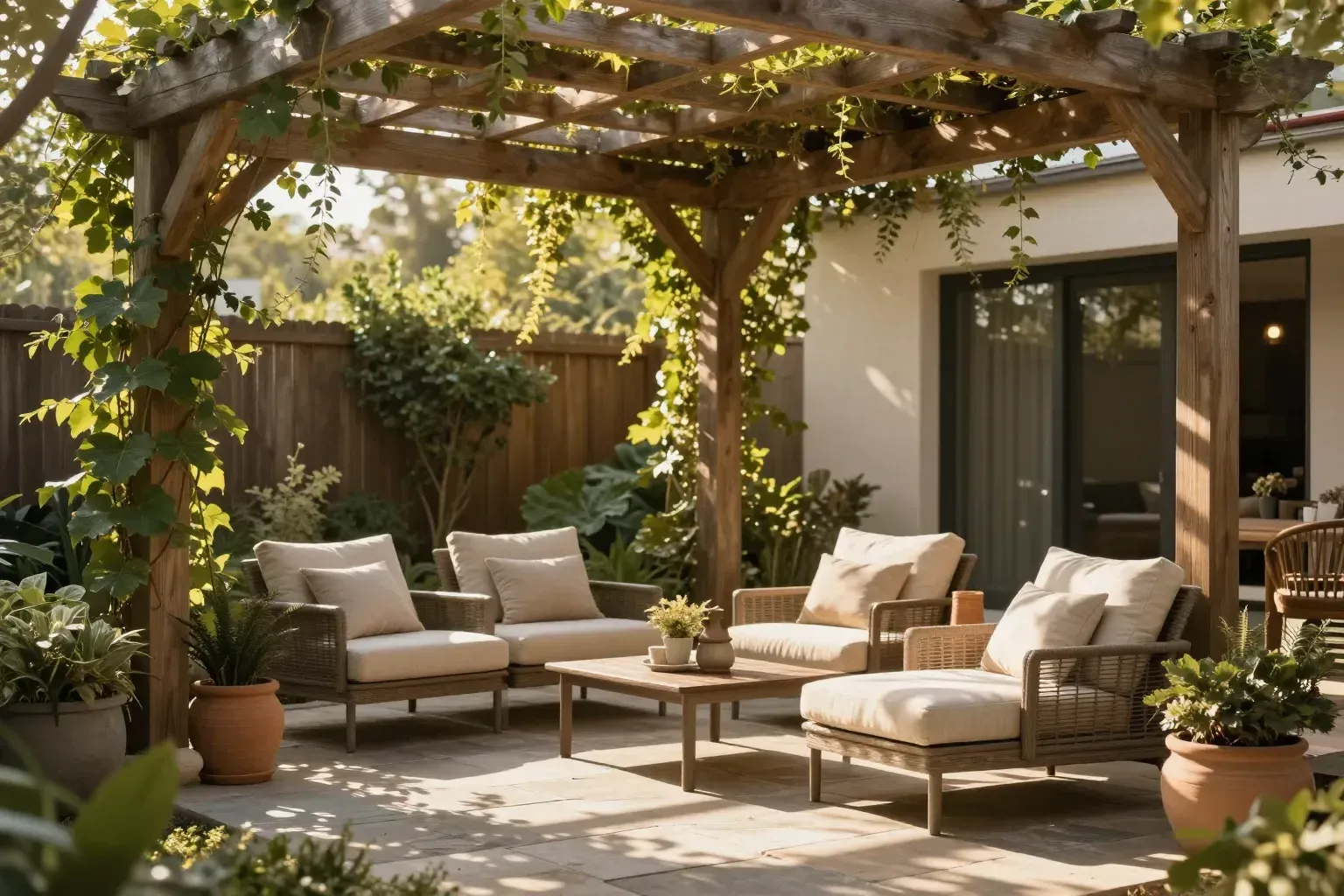
Shade is what makes a patio usable in summer. The structures worth the investment, the materials that hold up, and who each is wrong for.
| Our pick | Best for | Wrong for | Why it makes the list |
|---|---|---|---|
| Cedar & wood gazebos and pergolas (Fifthroom) | A permanent, characterful structure that becomes the backyard's focal point | Renters, or anyone who wants shade up this weekend with no commitment. | A specialist in wood outdoor structures: gazebos, pergolas, pavilions. The right call when you want a real building in the yard, not a temporary cover. Wood asks for occasional sealing in exchange for a look metal can't match. |
| Powder-coated steel or aluminum pergola | A clean, modern structure with almost no upkeep | Someone after the warmth of natural wood: metal reads sleek, not cozy. | The low-maintenance answer. Many come with louvered roofs you can angle or close against rain. Costs more than a kit pergola, lasts longer, and never needs sealing. |
| Retractable awning or canopy | Flexible shade off the side of the house, on demand | A standalone destination in the middle of the yard: an awning needs a wall to mount to. | The least-committed option: shade when you want it, gone when you don't. Right for a deck against the house; wrong if you're trying to shade a spot the house can't reach. |
A patio is only as usable as it is shaded. The furniture, the grill, the string lights: none of it gets used at 4pm in July if there’s nowhere out of the sun. Shade is the upgrade that makes the rest of the backyard pay off, and like the furniture under it, it’s bought once and weathered for years.
How we judged each structure
Two questions sorted this guide: how permanent do you want it, and how much upkeep are you willing to trade for looks? A built structure and a retractable awning solve the same problem in completely different ways, so for each we name who it suits and who should look elsewhere.
Permanent or flexible: decide that first
Everything downstream follows from one choice. A gazebo or pergola is a building: it anchors the yard, it lasts decades, and it’s a project to install and (for wood) to maintain. An awning or canopy is the opposite: shade you deploy and retract, mounted to the house, gone in winter. Neither is better; they answer different questions. If you want the backyard to have a destination, build something. If you just want the deck shaded by dinnertime, mount an awning.
Wood for character, metal for forgetting about it
Among permanent structures, the real fork is material. A wood specialist like Fifthroom is where you go for cedar gazebos and pergolas with genuine warmth, the tradeoff being that wood wants cleaning and re-sealing every year or two to hold its color and resist rot. Powder-coated steel or aluminum reverses that bargain: less natural warmth, but essentially no upkeep, and often a louvered roof you can angle against sun or rain. Pick wood if you’ll enjoy the maintenance ritual; pick metal if you won’t do it.
Where you put it matters as much as what it is
The most common shade mistake is placement. Track where the sun actually sits in late afternoon: that’s when you want the shade, and it’s rarely straight overhead. A structure in the wrong spot is decoration, not shelter. And anything tall and roofed catches wind, so a freestanding pergola or gazebo needs proper anchoring; a kit that just sits on the patio will eventually move in a storm.
Where to start
Settle permanent-versus-flexible, then match the material to how much upkeep you’ll genuinely do. Once the shade is sorted, the patio furniture underneath finally earns its keep through the hottest part of the day.